Stop Spreading the Peanut Butter: The Carry-Forward Defects Problem (Part 2 of 3)
Learn how separating in-cell from carry-forward defects reframes quality problem solving, and why 80% of a cell’s defects start upstream.


Learn how separating in-cell from carry-forward defects reframes quality problem solving, and why 80% of a cell’s defects start upstream.

You can be fully compliant and still underperform operationally. This is not unusual, even in mature aerospace and defense organizations. The compliance infrastructure in A&D organizations is impressive. Quality management systems are rigorously maintained. Traceability requirements are met. Audit readiness is strong. The documentation supporting every part, every process, and every inspection is thorough and…
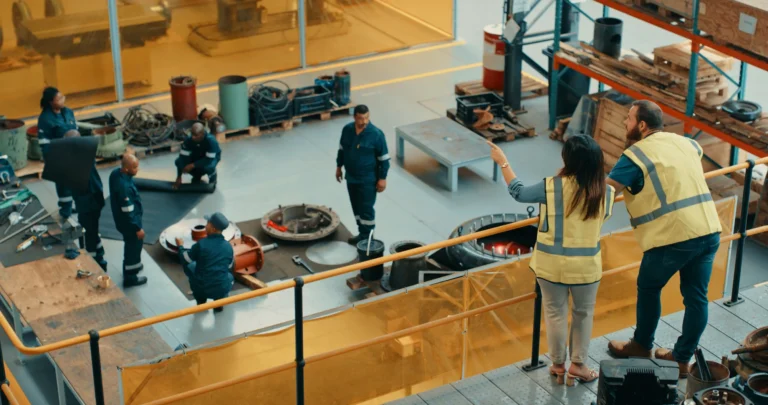
A Monday-morning lathe argument almost killed this aerospace plant layout redesign. One year later: 66% more parts shipped, 40% less cycle time.

Lean can be rebuilt — but not by relaunching tools. This article lays out how to restore lean after fatigue and drift: re-educating leadership, auditing the foundation, and rebuilding the daily habits that create flow. It’s Part 2 of a two-part CBS series, and a practical playbook for leaders who don’t want to wait for a crisis to act.

Most manufacturing operations do not have a shortage of quality data. They have a shortage of prioritized quality problem solving. In Part 1 of this three-part series, Todd Hanlin walks through why quality data keeps piling up while defects keep happening, and what it takes to move from firefighting to actual problem resolution. Part 3 will share the data from the current engagement where these principles are being applied inside one specific work cell.

Lean manufacturing fails when leadership forgets how it works. This article explains how lean erodes in aerospace, defense, and manufacturing environments when leaders turn over and cultural memory fades — and the warning signs that your operation is already drifting. It’s Part 1 of a two-part CBS series on lean fatigue and how to rebuild.

Improvement that doesn’t hold isn’t improvement. In the final part of his Operational Excellence series, Bob Morin explains how flow, Kaizen leadership, and a simple “does Monday look different?” test decide whether operational excellence leadership actually sticks — and boils it down to six habits.

Introduction Every organization that pursues serious operational improvement eventually reaches a milestone worth celebrating. A major reduction in lead time. A quality breakthrough. An efficiency gain that took years to achieve. The team worked hard. The results are real. Recognition is appropriate. And that’s precisely when a particular leadership failure becomes most likely. I’ve spent…

A single lean practitioner in a facility of 500 people is a candle in a dark room. The light is real. The impact is minimal. This is the central challenge of building an operational excellence program that produces sustained results at scale. The tools work. The methodology is proven. The problem is that one person…

Imagine a small distribution company, with an annual revenue of $12 million. A plant branch of a multimillion-dollar organization, it has 15 employees and a glaring issue: only 40% of shipments reach their customers on time. This means that 6 out of 10 customers aren’t receiving their orders as expected. The CEO recognizes the problem…
© 2025 All Rights Reserved.